Don’t Build Your Shop on Someone Else’s High Street

If your business mostly lives as a link in an Instagram bio, you are in good company. It is quick, it is free at the point of use, and it puts you where customers already scroll. But there is a difference between being visible on someone else’s platform and having a base of your own. In 2026, with feeds busier and AI tools reshaping how people find businesses, that difference matters more than ever.
The market stall and the shop
Think of social media as a market stall inside a very busy market. The footfall is excellent. You can set up quickly, test what people like, and have a laugh with customers. But the market owner decides the opening hours, the layout, the rules, and who gets the best pitch. If the market changes direction, your stall does not automatically come with you.
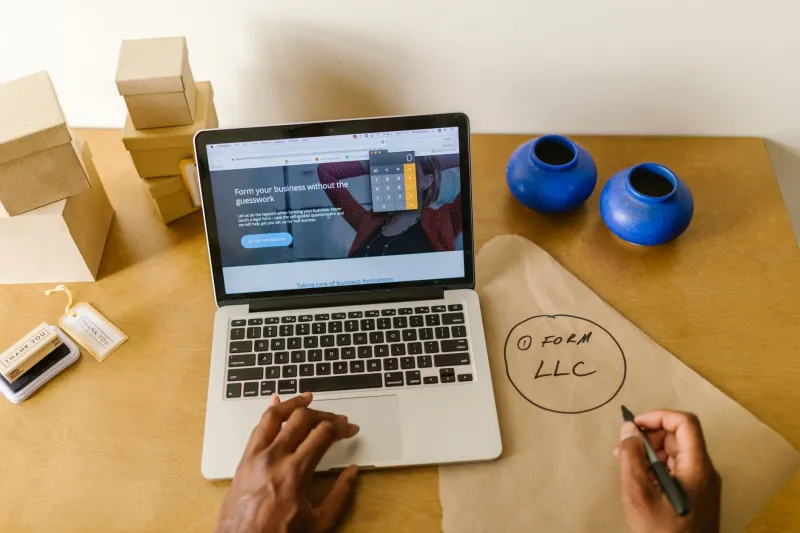
A website is closer to a shop on a street you chose. It does not need marble floors or a three-floor layout. For most UK small businesses, a clear homepage, a handful of useful pages, and a sensible enquiry route are enough. The point is not to have a flashy site for its own sake. The point is to have a place you control when someone decides they want to know more about you.
What a social profile cannot do on its own
Social platforms are excellent at helping people discover you. They are less good at being the stable centre of your operation. A few practical gaps show up again and again:
- Credibility checks. Many buyers, especially in the UK, do a quick search before spending money. If they cannot find a proper website with contact details, service information, and a bit of proof that you are real, the enquiry can quietly die.
- Search and AI visibility. Google and AI answer tools need pages they can read, understand, and cite. A social profile may appear, but it is not a substitute for a well-structured website with clear service pages and local signals.
- Owned contact details. Followers are borrowed attention. You cannot export an Instagram following into a spreadsheet and email them when you have a quiet week. An email list or a list of past enquirers, collected with proper consent, is a business asset.
- Continuity. Accounts get restricted, algorithms shift, and platforms fall out of fashion. It is rarely a dramatic disaster, but it can be a slow leak. A website gives you somewhere to send people while you sort things out.
None of this means social media is a waste of time. It is not. It means social media should be the shop window, not the stockroom, till, and office all at once.
What good enough looks like in 2026
A useful small business website does not need to be enormous. It needs to answer the questions a real customer asks before they get in touch. In practice, that usually means:
- A homepage that says what you do, who you do it for, and where you are.
- Service or product pages that are specific enough to be helpful.
- An About page that gives a sense of the people behind the business.
- A contact page with a phone number, email address, and a form that actually works.
- Clear opening hours or availability, if relevant.
- Basic privacy and cookie information that matches what you actually do.
- A fast, mobile-friendly layout with one obvious next step.
That is the practical minimum. It is also the sort of site that can be improved month by month rather than rebuilt from scratch every two years. A well-maintained simple site beats a neglected complicated one almost every time.
Turning followers into an audience you own
If you have built a following, do not panic and abandon it. Use it. The aim is to give people a reason to take one step closer to your business, on ground you control. Here is a short checklist for UK small firms:
- Make the website link obvious. Put it in your bio, your link sticker, your pinned post, and your email footer. Point it at a useful page, not always the homepage.
- Give people a reason to leave the feed. A practical guide, a checklist, a first-order offer, a booking link, or a local event invitation will usually do more than a vague request to sign up.
- Collect email addresses properly. Ask for consent, explain what people will receive, and make it easy to unsubscribe. Keep it simple and comply with UK GDPR and PECR rules.
- Use offline moments. Add a QR code to receipts, packaging, shop windows, invoices, and leaflets. Customers who meet you in person are often happy to check the website later.
- Send social traffic to specific pages. If you post about a service, link to that service page. If you post about a case study, link to that case study. It sounds obvious, but it is often missed.
- Ask where people found you. Add a simple question to your enquiry form. It is rough data, but it is better than guessing.
- Keep your profiles consistent. Your social bio, website, Google Business Profile, and directory listings should tell the same story. Mixed details erode trust.
- Export and back up the important stuff. Keep a copy of your email list and your key content. Do not rely on a platform to be your only archive.
Start with one useful step
If your website has been sitting untouched while social media got all the attention, do not turn it into a six-month project. Spend an afternoon on the basics. Update the homepage. Check the contact form. Add one clear reason for people to join your email list. Then point your social bios at the most useful page you have.
That is the quiet work that makes a business more resilient. Social media can bring the crowd. Your website can welcome them, answer their questions, and keep the door open when the feed moves on. At Klick Digital, that is the balance we would recommend for most UK small firms in 2026: stay social, stay visible, but do not build your shop on someone else’s high street.